Mercedes-Benz 190 SL
| Brand | Mercedes-Benz |
| Model | 190 SL |
| Color | Baby Blue |
| Transmission | 4-speed manual transmission |
| Pk | 105 ch |
| Mileage | 4.870 km (lu) |
| Year | 1960 |
| Price | 79.000 € |
Unveiled in February 1954 at the New York Auto Show alongside the legendary 300 SL, the Mercedes-Benz 190 SL was born out of a desire to offer an elegant and sporty roadster that was more affordable and easier to drive than its prestigious big sister.
The initiative was spearheaded in particular by Max Hoffman, the Mercedes-Benz importer in the United States, who was convinced of the commercial potential of a luxury convertible aimed at American customers who were drawn to the styling of the 300 SL but were looking for greater comfort and ease of use.
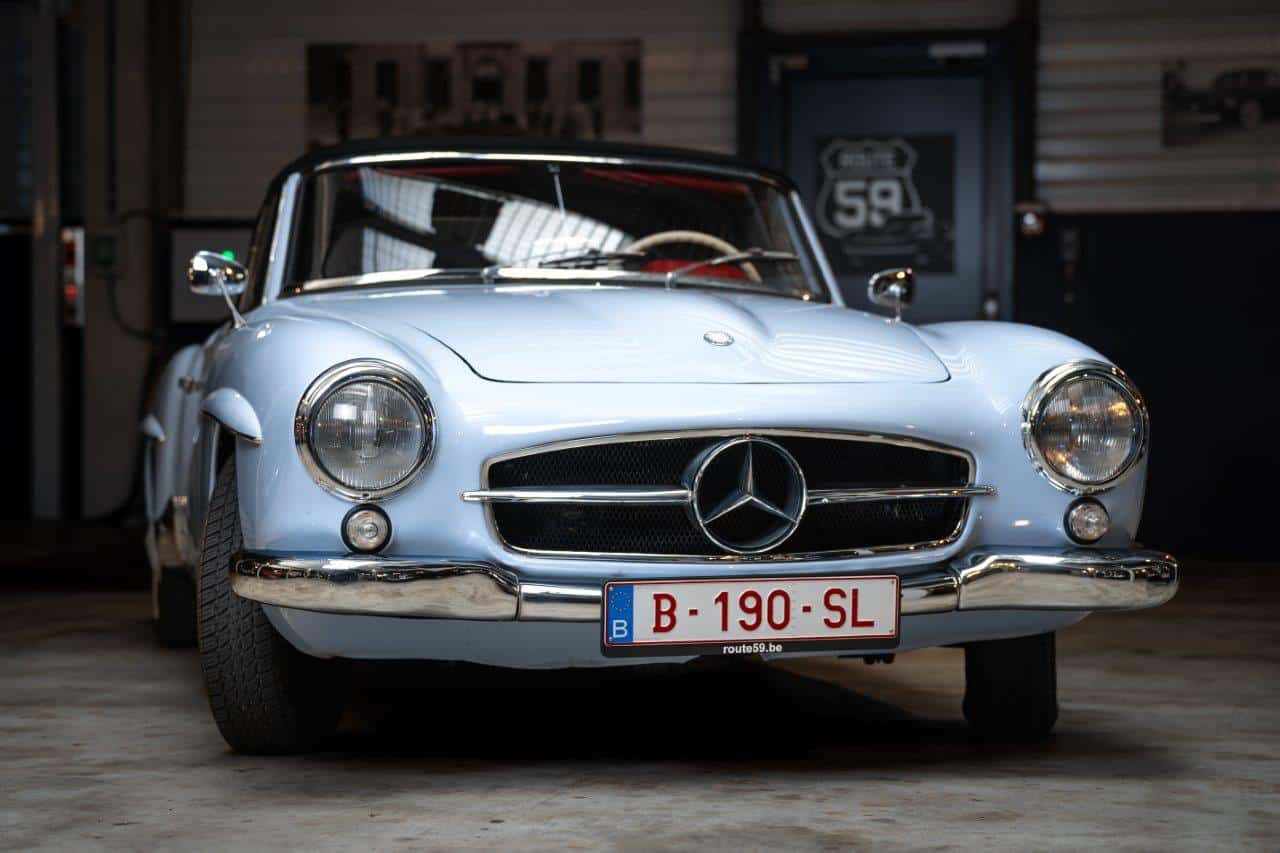
Introduced in 1955, the 190 SL incorporated the key design elements of the 300 SL: a long hood, a wide grille adorned with the Mercedes star, gently curved fenders, and a low-slung silhouette that was both sporty and refined.
Unlike the 300 SL, a true race-bred sports car, the 190 SL prioritizes comfort, a smooth ride, and open-air driving. It quickly became one of the benchmarks for luxury convertibles, particularly popular in the United States, where it symbolized European luxury and the postwar lifestyle.
Produced until 1963, when it was replaced by the famous 230 SL “Pagode,” only 25,881 units were built. Today, it ranks among the most elegant and sought-after classic Mercedes models.
A particularly attractive copy
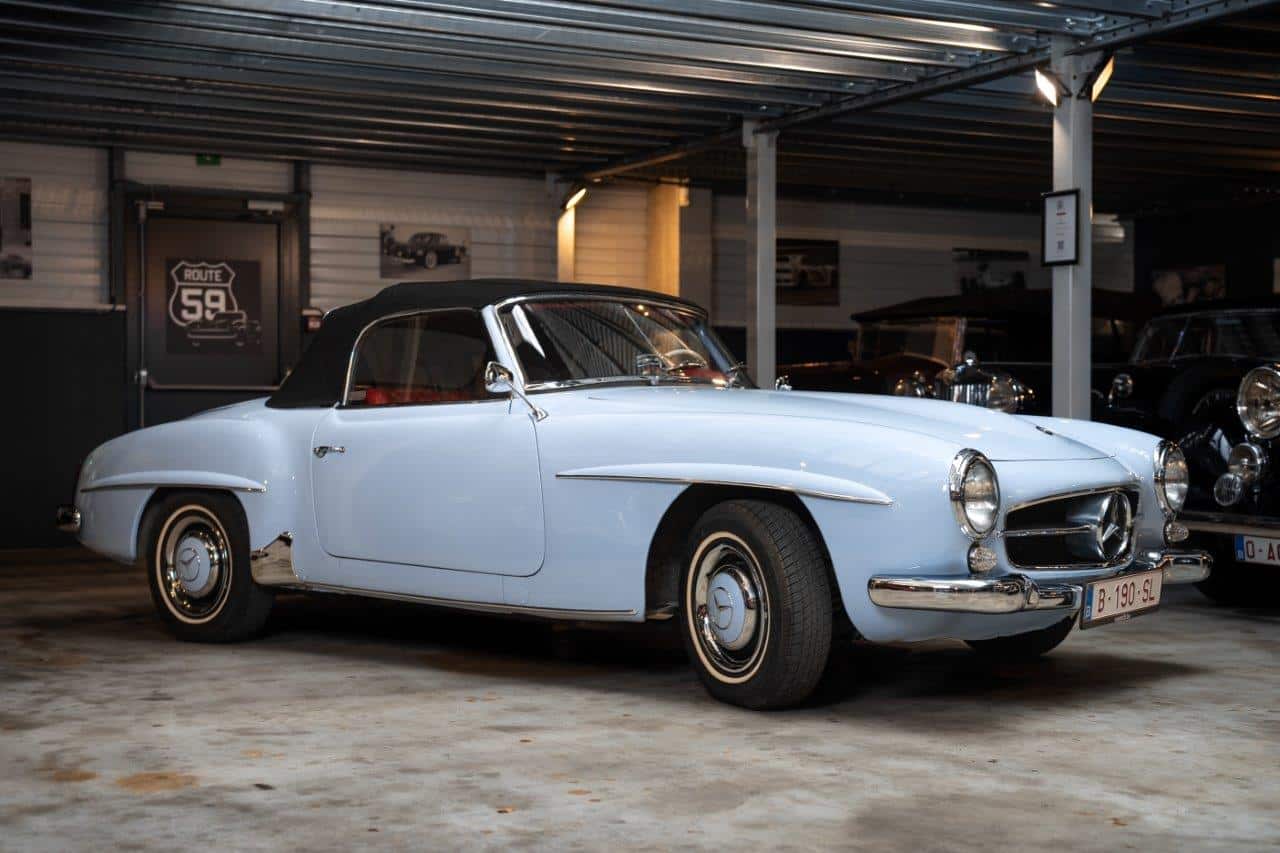
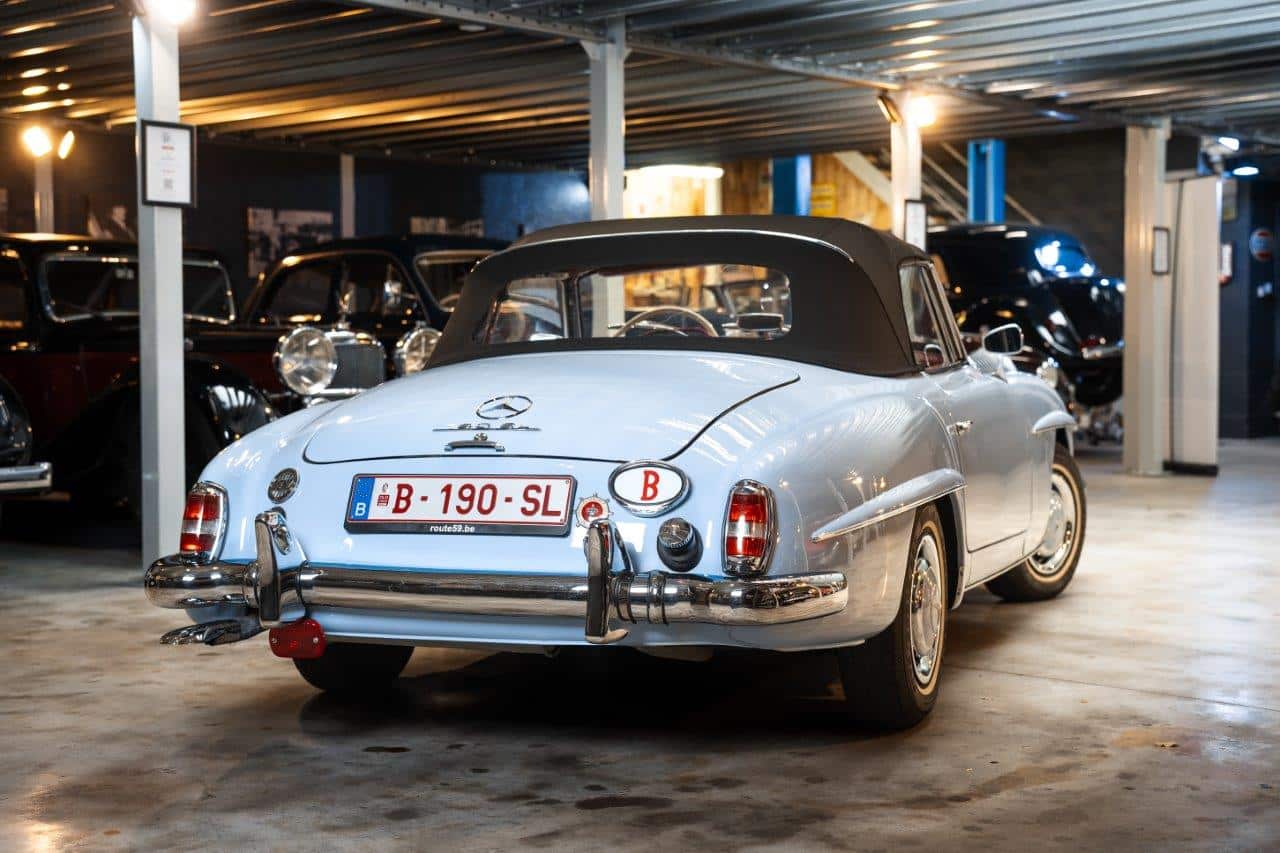
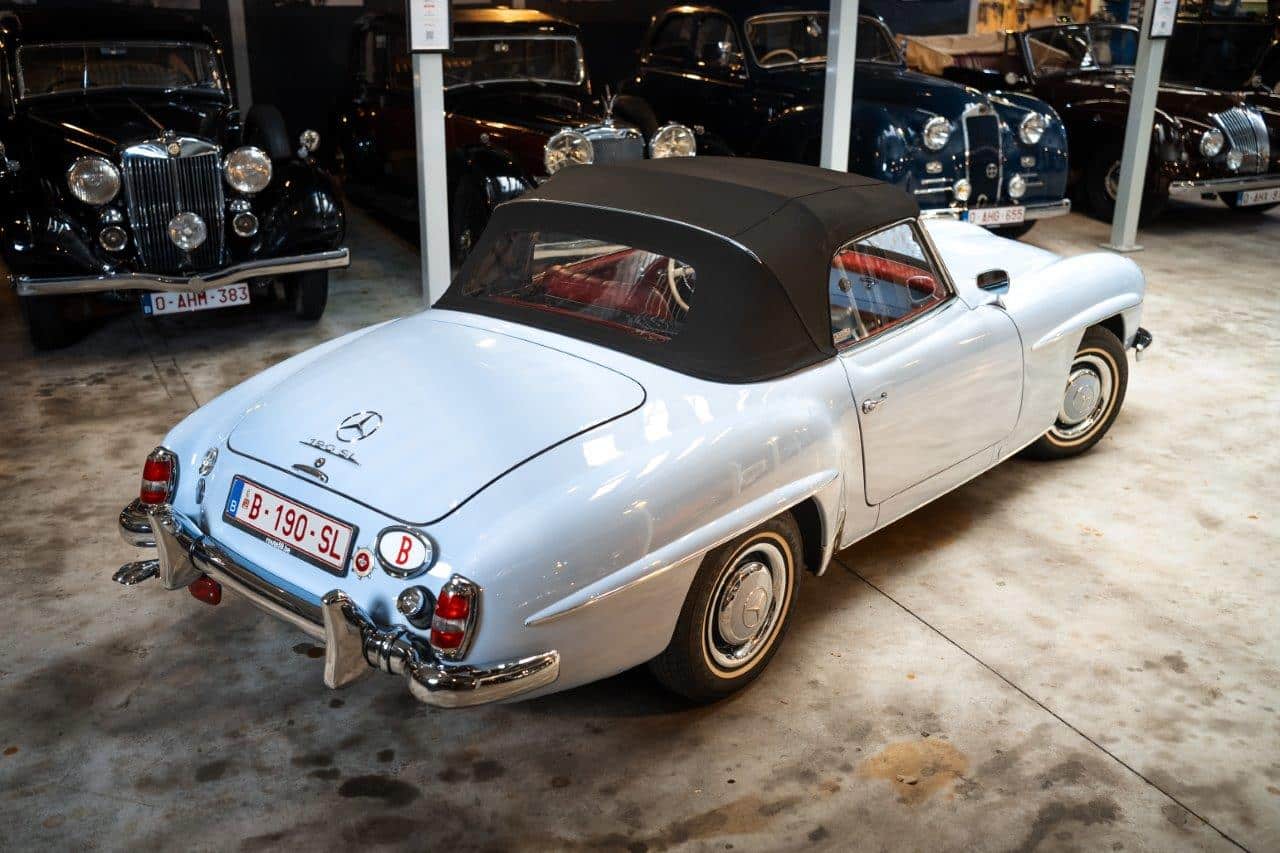
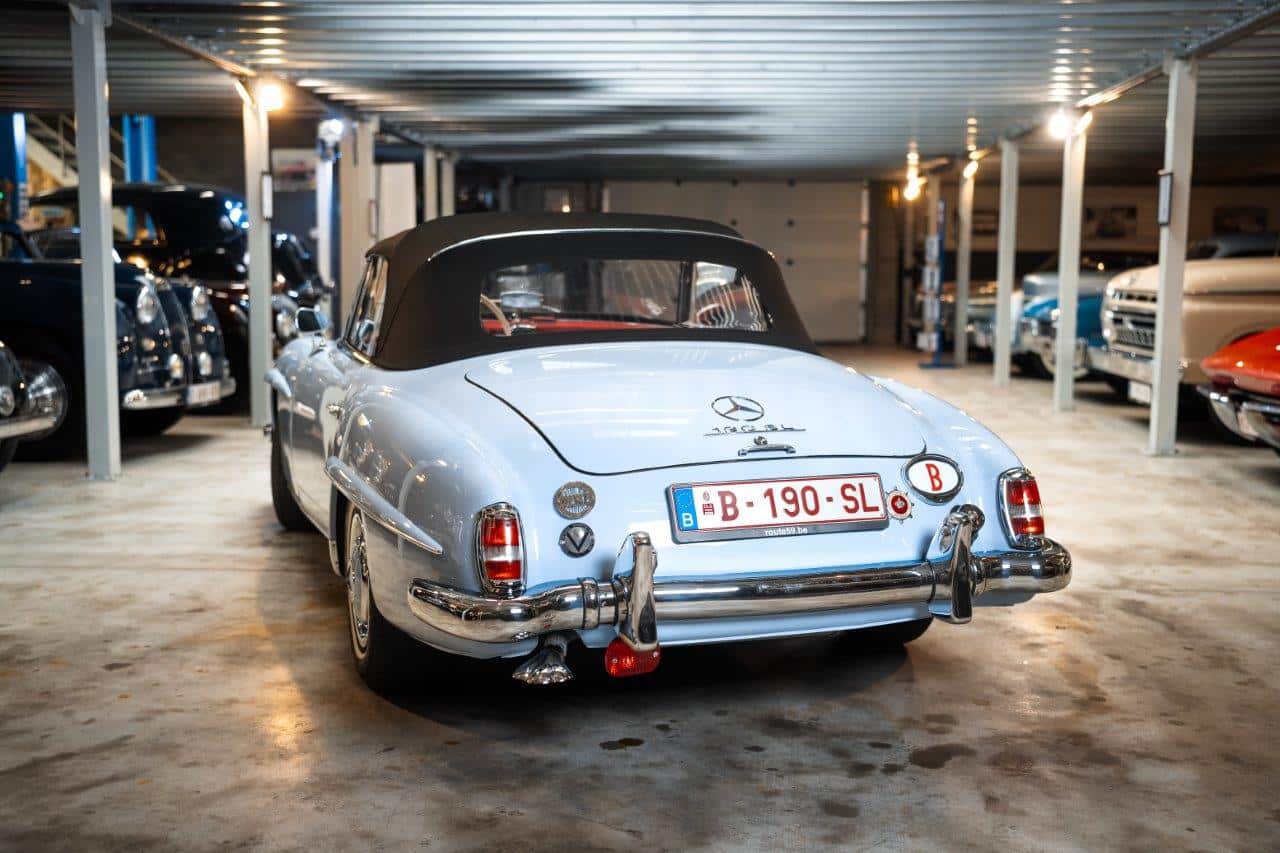
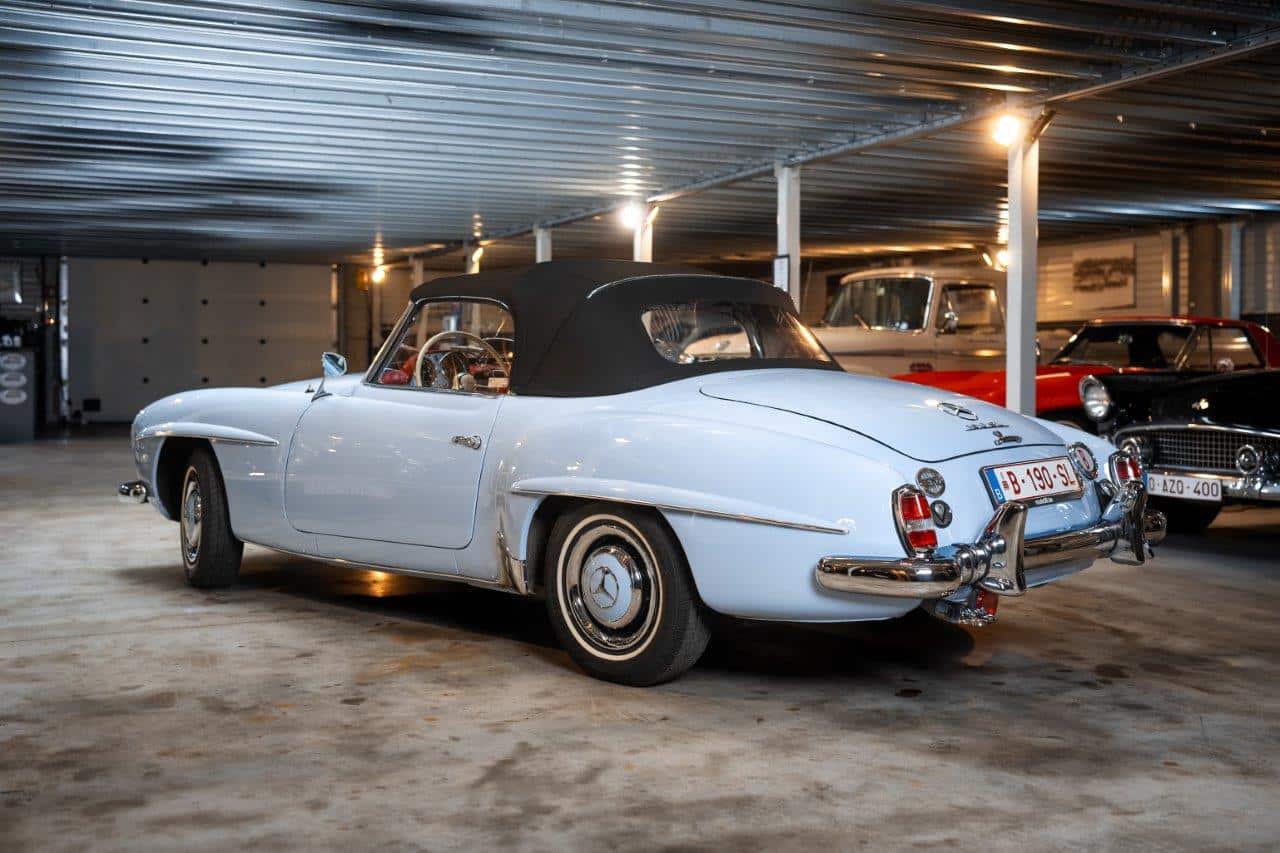
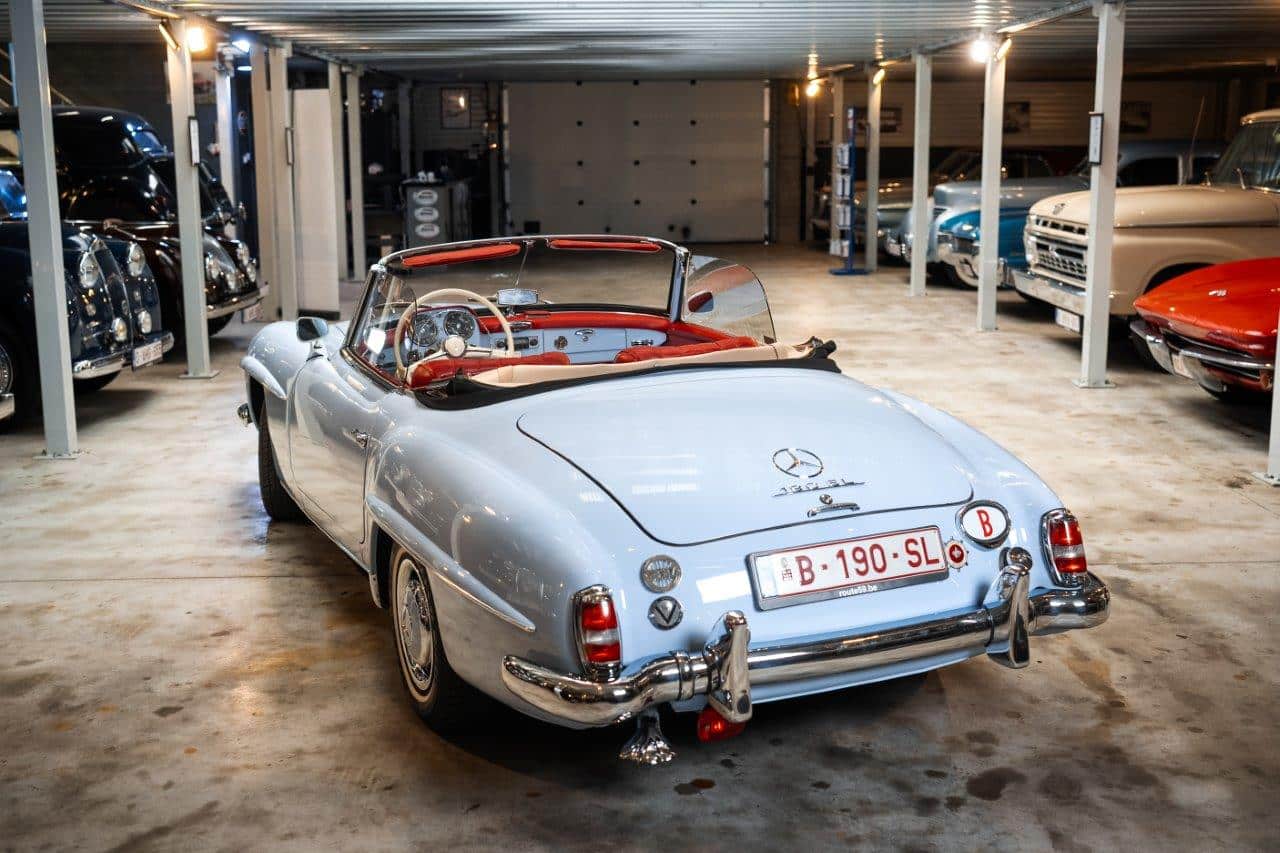
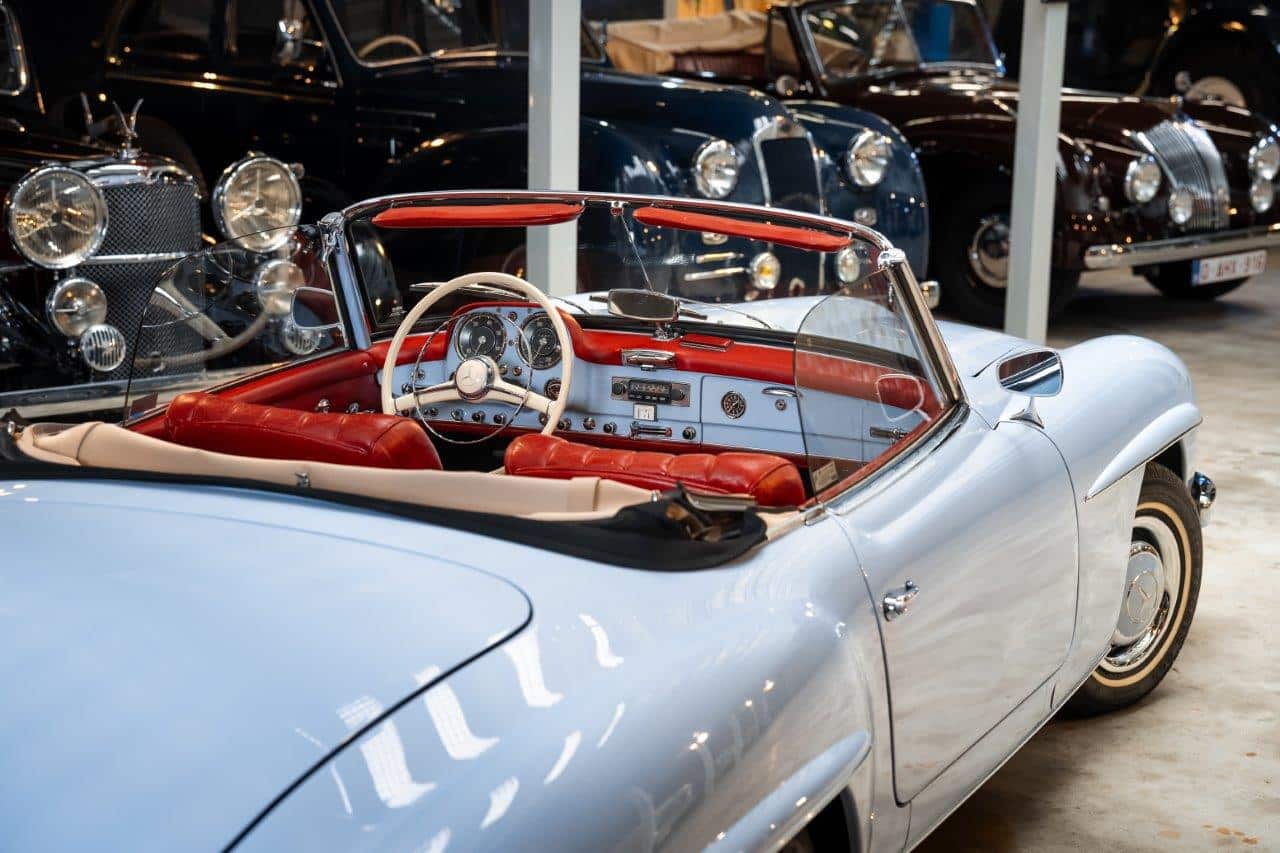
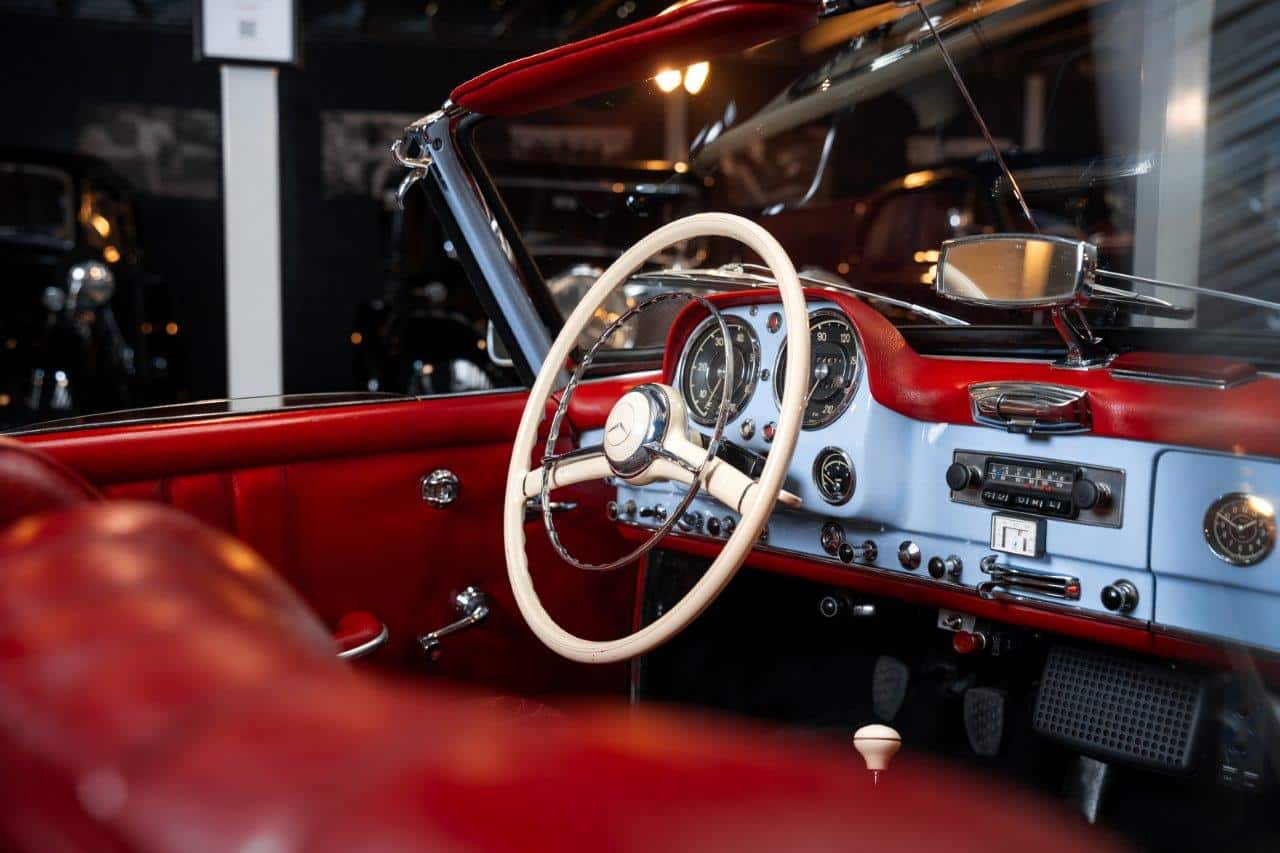
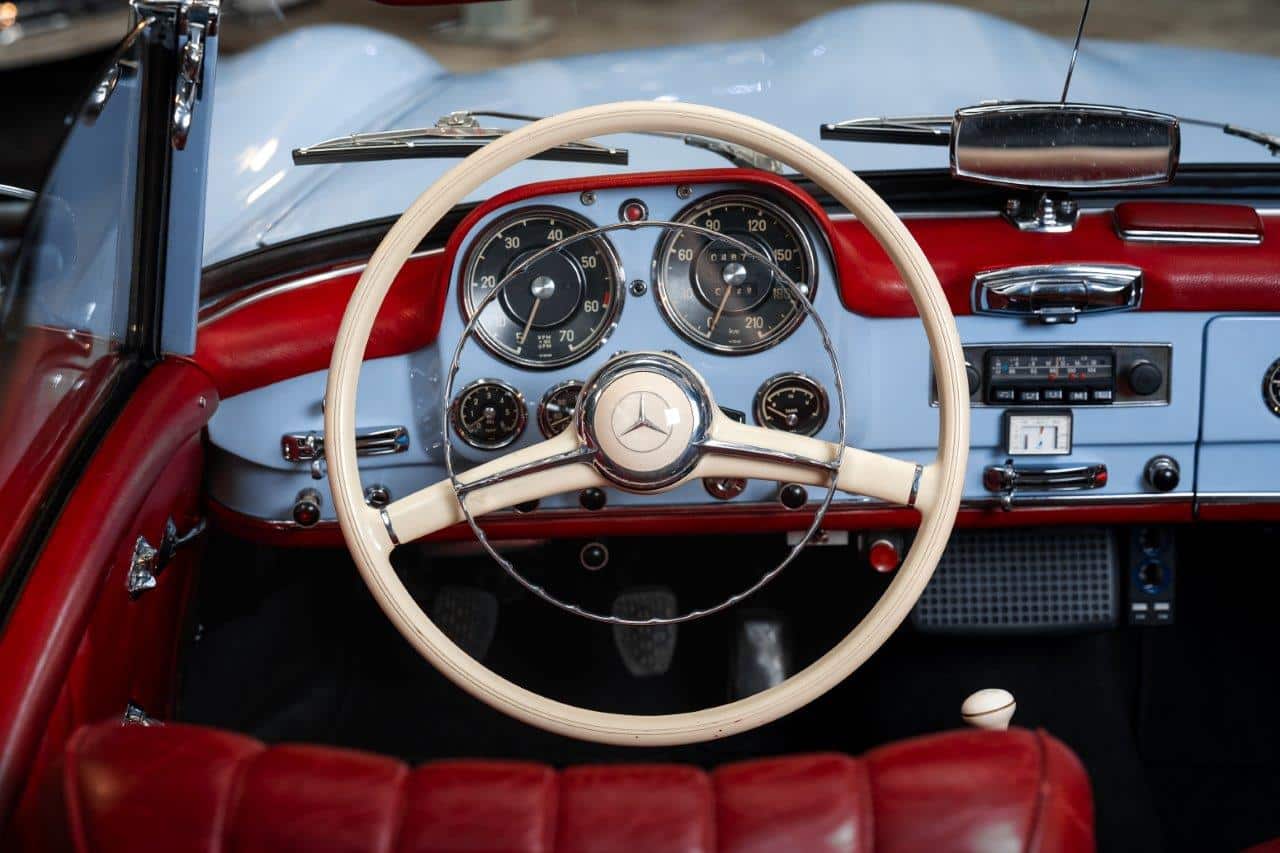
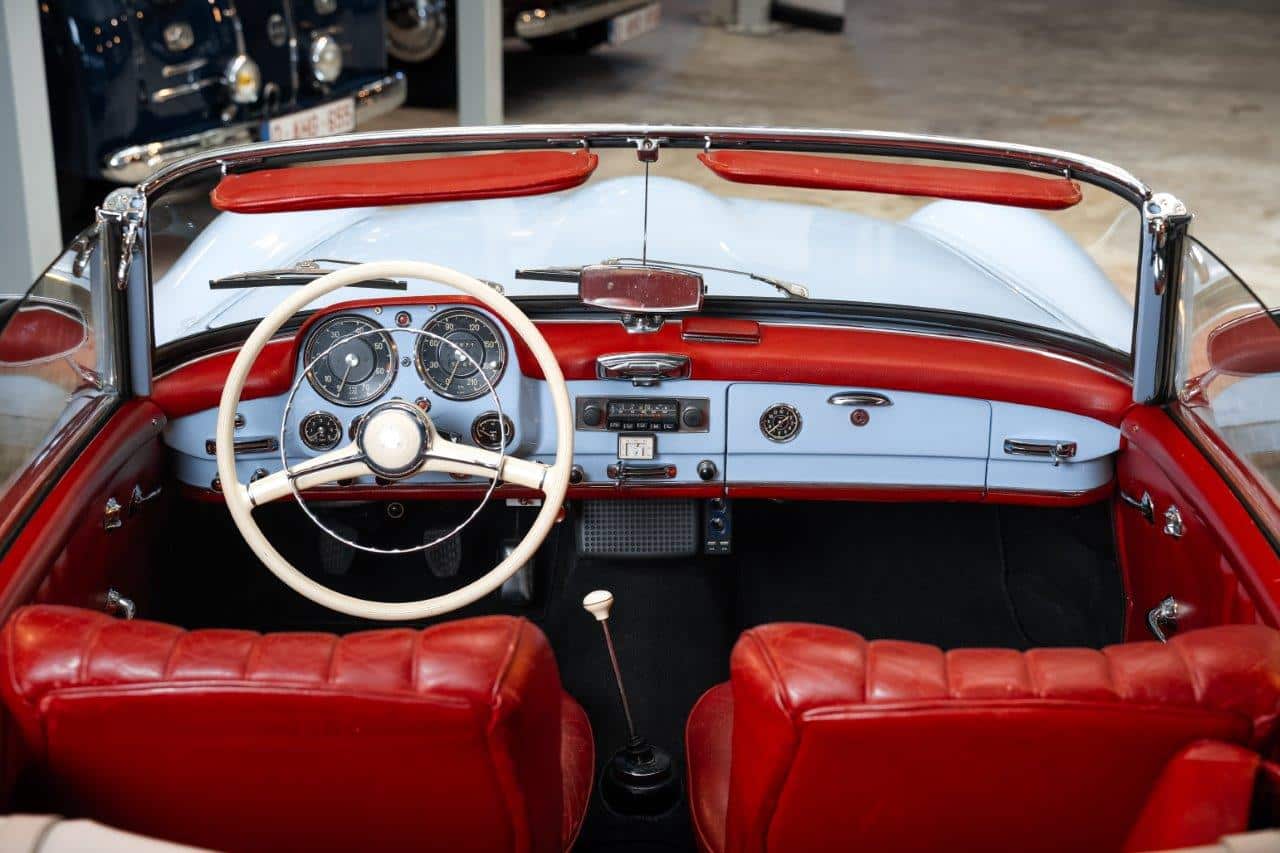
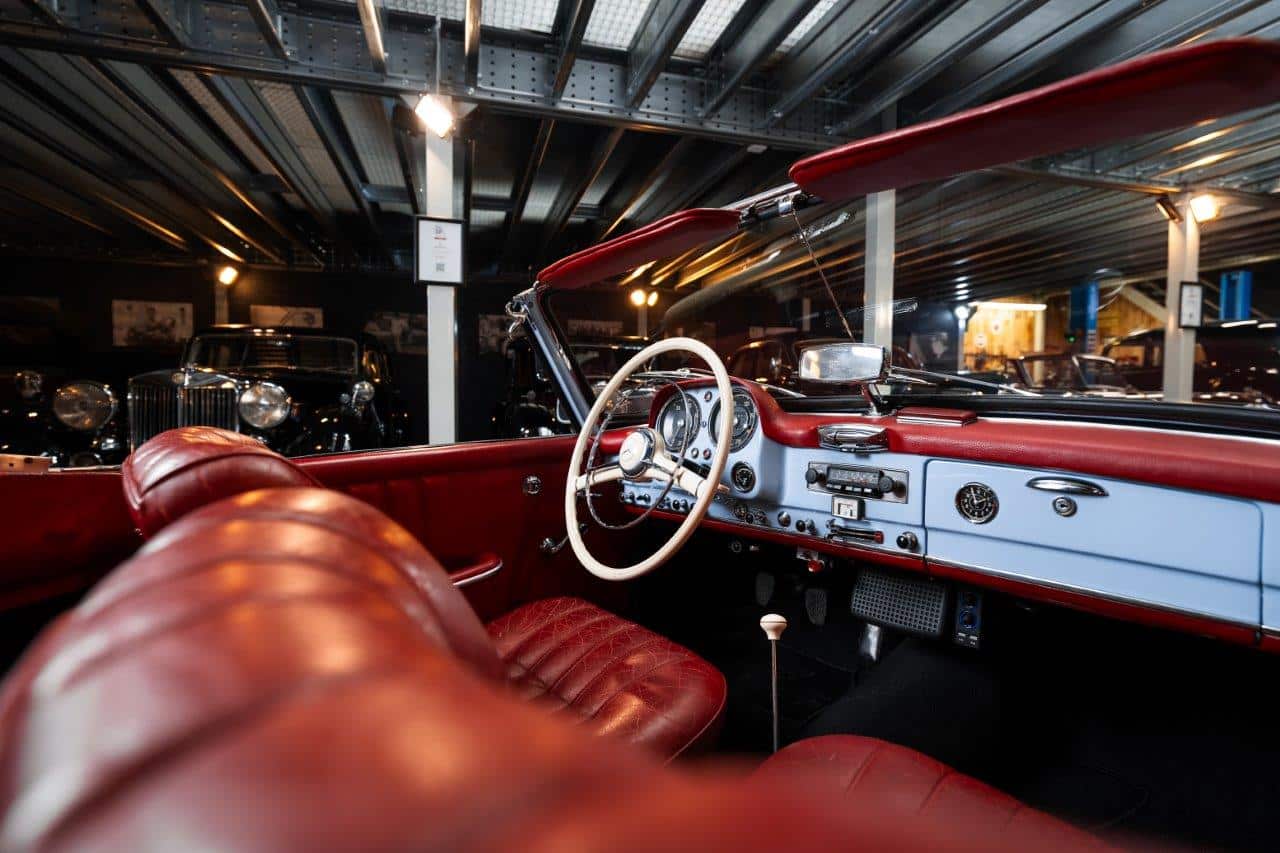
This 1962 Mercedes-Benz 190 SL, from the final years of production, features a stunning combination of light blue “Baby Blue” exterior and red leather interior, complemented by black floor mats. This particularly elegant contrast beautifully highlights the car’s sleek lines and the refinement of its interior.
It also stands out for its very comprehensive equipment package, which combines several factory-installed options and comfort features, some of which are rarely found on this model.
Its features include, among others:
- The rare third rear seat, installed crosswise behind the front seats. An uncommon option that adds a truly unique touch to this roadster, which is usually considered a strict two-seater.
- A vintage Becker radio, complete with its antenna mounted on the left fender. Becker was one of the most prestigious suppliers of car audio systems and, among other things, equipped high-end Mercedes models.
- A hand-wound watch, a typical feature of 1950s instruments.
- Sun visors and a right-side exterior mirror round out the driver’s equipment.
- A windshield washer—a handy accessory back when this feature wasn’t yet standard.
- Additional fog lights, which add to the elegance of the front end.
- Two-point seat belts, which improve occupant safety.
- An exterior luggage rack on the trunk—an iconic accessory of classic touring roadsters—that’s as elegant as it is practical for travel.
- A soft top cover and a spare tire cover, which neatly round out the car’s appearance.
Of course, there’s also its soft top and red leather upholstery, which give this magnificent convertible its distinctive character.
Robust and refined mechanics
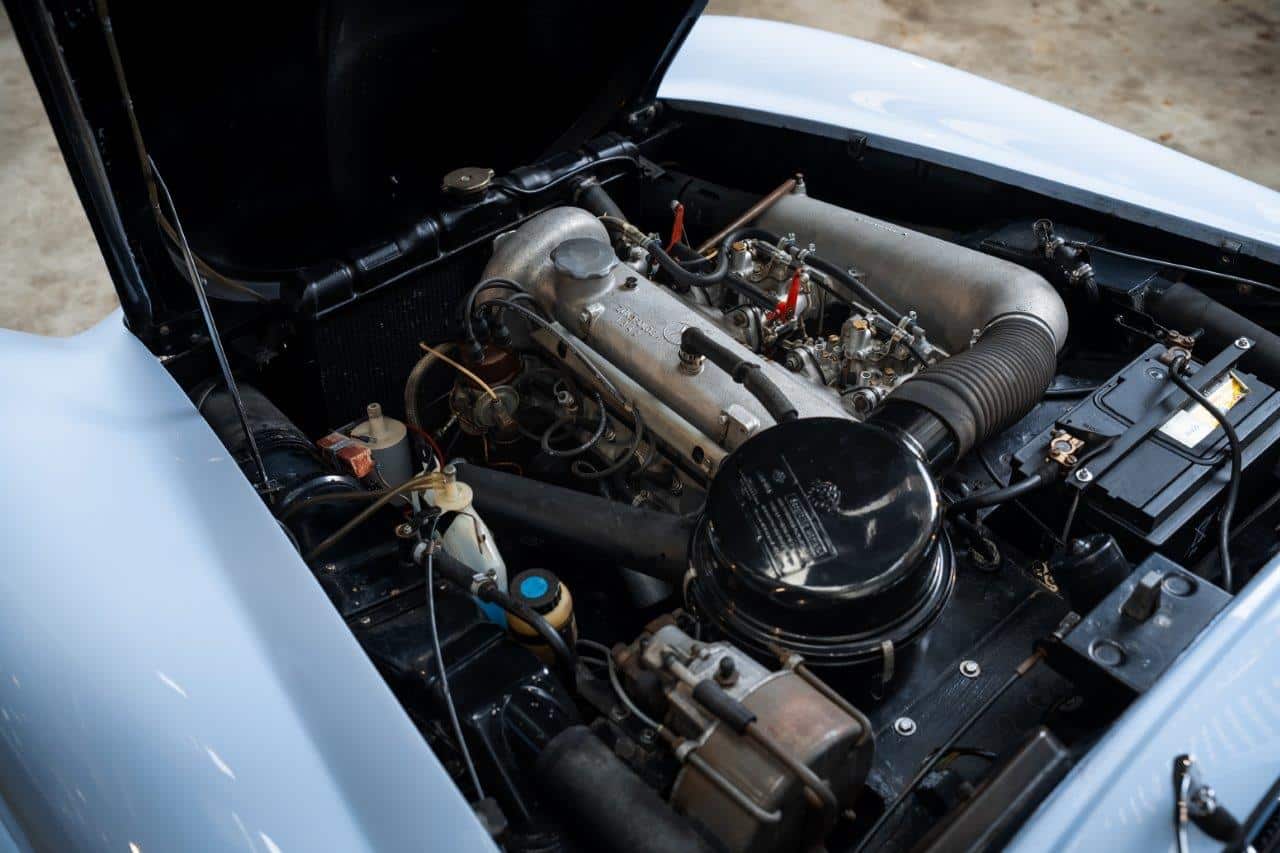
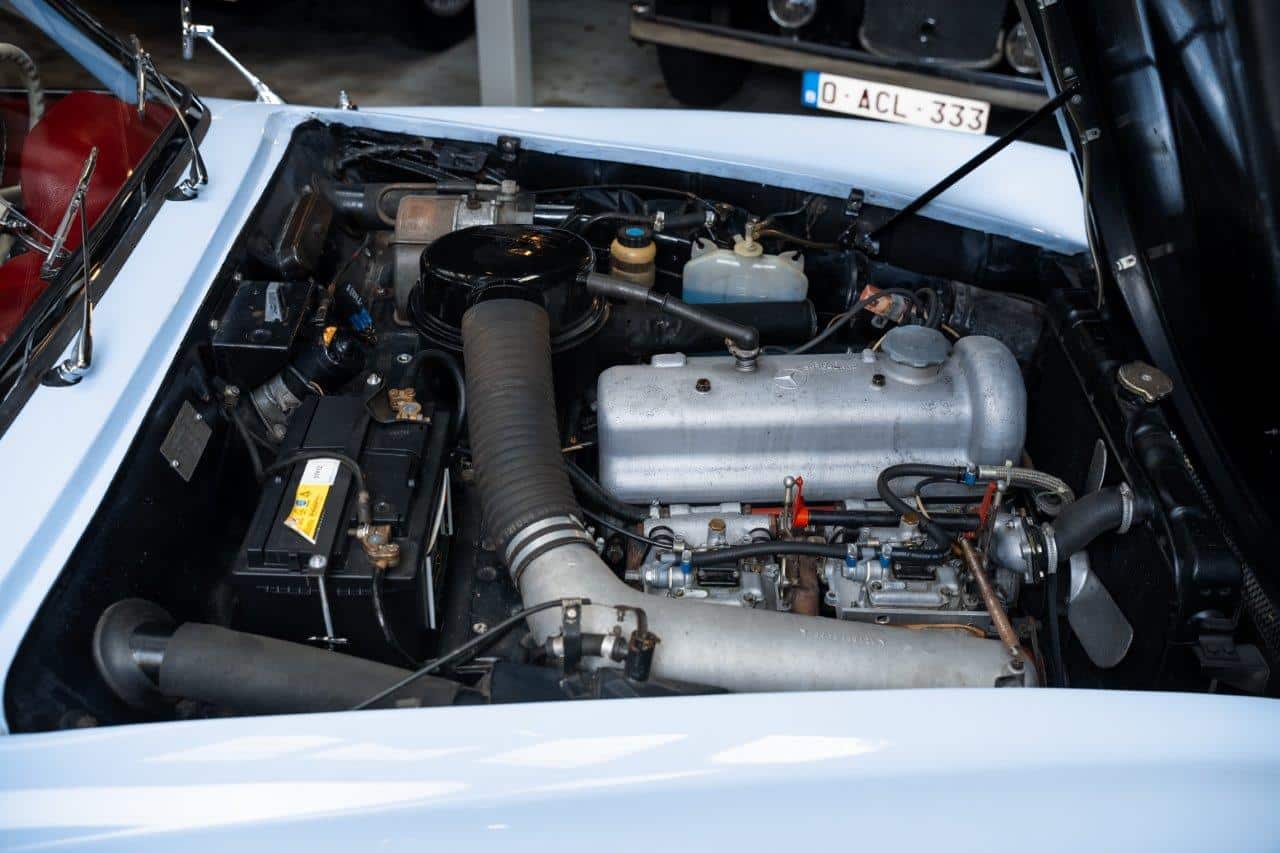
Under its long hood, the 190 SL is powered by the Mercedes M121 engine, a 1,897 cm³ inline-four that produces 105 ch at 5,700 rpm in its original configuration.
Its design was particularly sophisticated for its time: a cast-iron block, an aluminum cylinder head, a chain-driven overhead camshaft, and liquid cooling.
It is paired with a four-speed manual transmission with fully synchronized gears, which sends power to the rear wheels.
The monocoque structure ensures good rigidity, while the four independent wheels—with double wishbones in the front and a swing axle in the rear—offer an attractive balance between comfort and handling. Braking is handled by four power-assisted hydraulic drum brakes.
Weighing about 1,140 kg and with a top speed of nearly 170 km/h, the 190 SL delivered quite respectable performance for its time. But its true calling remains grand touring: driving with elegance, comfort, and pleasure, rather than pursuing pure performance.
Weber Carburetors: A Design Inspired by Mercedes Research
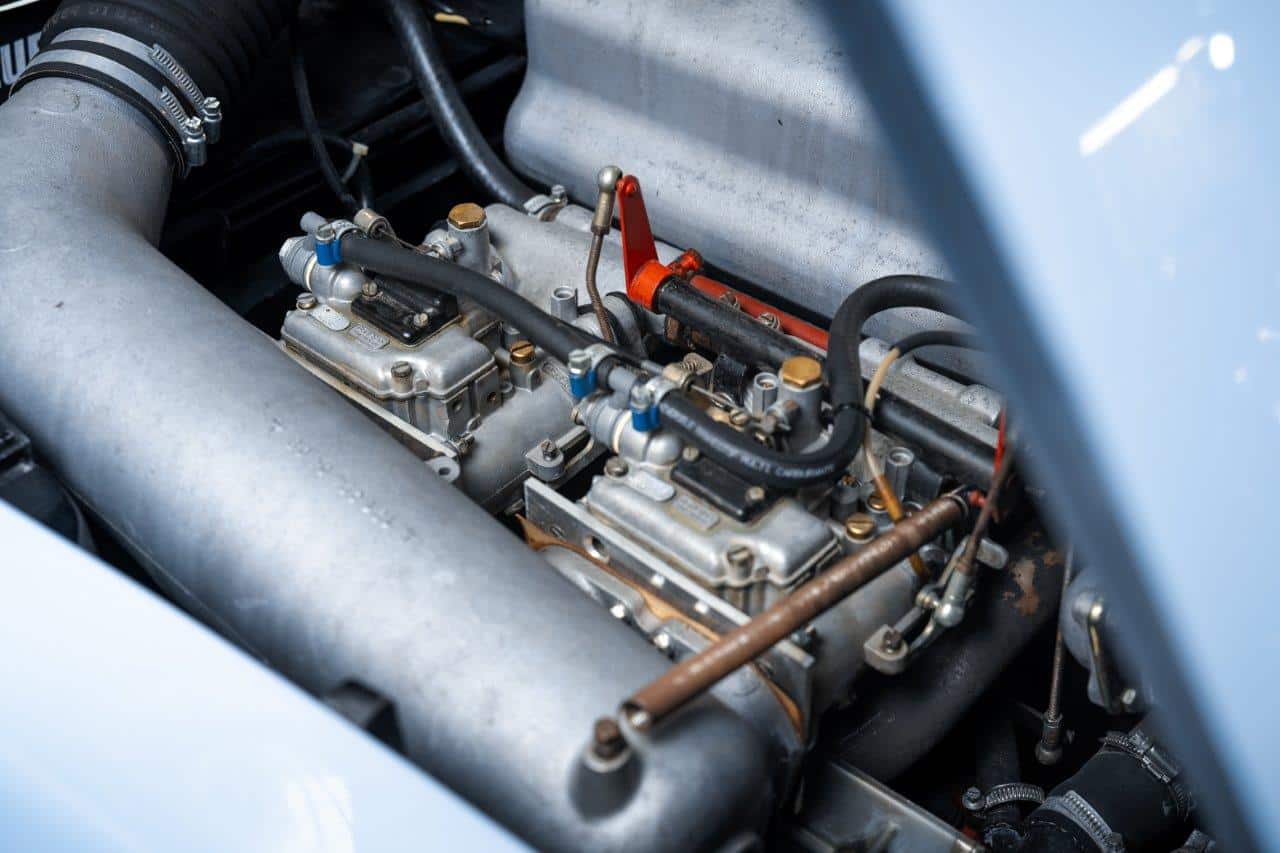
One of the most interesting mechanical features of this car is its conversion to two Weber carburetors, which replaced the original Solex 44 PHH carburetors.
This transformation has a particularly interesting history, as it has its roots in the very development of the 190 SL.
As early as 1954, Mercedes engineers were experimenting with various fuel delivery systems for their new four-cylinder engine. Among these was a system using two Weber 45 DCOE carburetors.
The tests conducted in November 1954 are particularly revealing: this configuration allowed the engine to produce 115 ch, compared to the 105 ch of the production version, which was ultimately equipped with Solex carburetors. The Weber carburetors also demonstrated impressive responsiveness at low RPMs.
Mercedes will nevertheless continue to use Solex engines in production.
Over the decades, these components will become one of the most challenging aspects of maintaining the 190 SL. Their relatively complex design, synchronization issues, and wear on certain components can make adjustments difficult and affect the driving experience.
That is why various conversion kits for Weber carburetors have been developed and adopted by experts on this model.
This particular vehicle has undergone exactly such a conversion, while retaining the original large air box and a remarkably unobtrusive mechanical layout.
The main benefit of this conversion does not necessarily lie in gaining additional power, but rather in the engine’s performance.
When properly adjusted and synchronized, Weber carburetors can provide smoother fuel delivery, more linear acceleration, and a more responsive engine, particularly at low and mid-range RPMs.
As a result, the 190 SL gains in smoothness, responsiveness, and ease of driving. Acceleration feels more natural, and the engine responds more readily to the accelerator.
This really brings out the car’s full character: it retains the charm and authenticity of a classic grand roadster, with a driving experience that is particularly enjoyable.
This development is all the more interesting because it builds on the research Mercedes conducted during the model’s development.
A true driver’s car
The 190 SL has a personality quite different from that of modern sports cars. Its charm lies in the balance between the beauty of its body, the quality of its design, and the smoothness of its handling.
Behind the wheel, the low driving position, the long hood, the large steering wheel, and the magnificent instrument panel immediately transport the driver back to the atmosphere of the 1950s and 1960s.
Its four-cylinder engine offers plenty of power to enjoy driving on back roads, while the manual transmission and rear-wheel drive preserve that direct connection to the engine that is what makes classic cars so appealing.
Thanks to its Weber conversion, this model adds a particularly appealing level of flexibility and ease of use to the experience.
With the wind in your hair, the purr of the engine, the elegance of the dashboard, and the scenery rolling by, every drive reminds you why the 190 SL has become one of the greatest icons of the European convertible.
It’s not just a car to admire in a garage, but a vehicle designed for traveling, exploring beautiful roads, and savoring every kilometer.